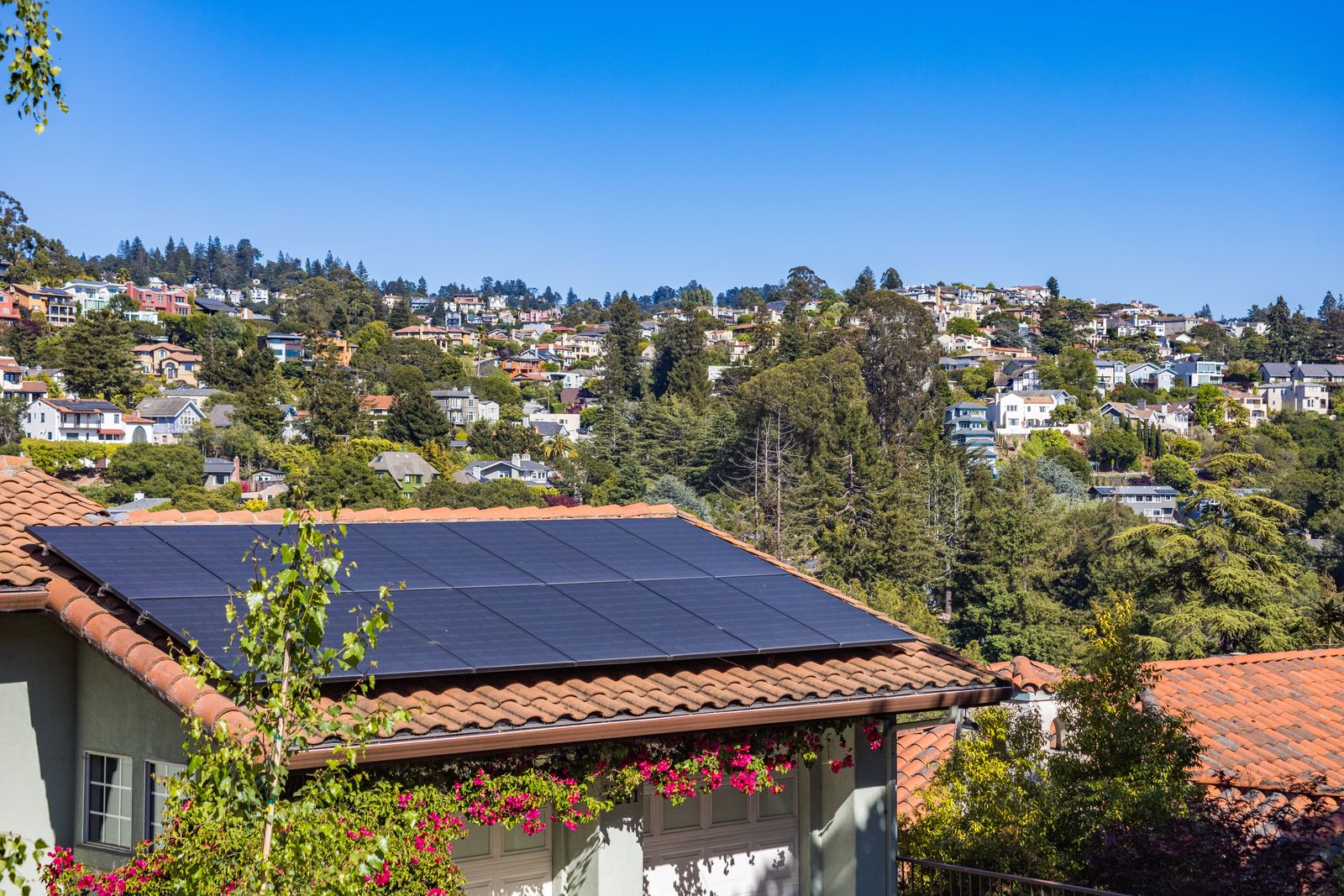
More households across Scotland are fitting solar photovoltaic (PV) panels than ever before. Modern panels generate useful electricity even under the diffuse, grey light of a Scottish winter sky, and a well-designed array on a south, east or west-facing roof can cover a meaningful share of a home's annual electricity use. With battery storage added, surplus daytime generation can be stored for the evening, reducing reliance on the grid at the times you use most.
This site is run by Scottish Energy Efficiency. We arrange no-obligation surveys and quotes for paid domestic installations right across Scotland, from the Borders to the Highlands. The installations themselves are carried out by our MCS-certified partner, so you benefit from a properly accredited, warrantied system. We do not fit kits ourselves or sell over the phone — every quote starts with a proper look at your roof, your usage and your goals.
How solar performs in Scotland
A common worry is that Scotland's weather and short winter days make solar a poor investment. In reality, panels respond to daylight, not direct sunshine, and Scotland's long summer days give a generous generation window from April to September. The bulk of a solar system's annual output arrives in these months. Winter output is lower but not zero — a clear, cold January day still produces a useful charge, and cool panels actually run more efficiently than hot ones. A correctly sized array, oriented and pitched to suit your roof, is the key to a sensible return.
What we cover on this site
- Solar costs in Scotland — what influences the price of a domestic system and how to compare like for like.
- How solar works — panels, inverters, batteries and how it all connects in your home.
- Does solar work in Scotland? — an honest look at generation through the seasons.
- Battery storage — whether a battery makes sense for your household.
- Planning permission — permitted development rules in Scotland and when you need to apply.
- Areas covered — the Scottish regions our partners install in.
Local solar guides
We have written dedicated guides for the main population centres, each covering local roof types, shading issues and the installation process where you live:
- Solar panels in Glasgow
- Solar panels in Edinburgh
- Solar panels in Aberdeen
- Solar panels in Dundee
- Solar panels in Inverness
- Solar panels in Stirling
- Solar panels in Perth
- Solar panels in Fife
- Solar panels in Ayrshire
- Solar panels in Lanarkshire
Roof orientation and shading
A south-facing roof is the ideal in Scotland, giving the highest total annual generation. East and west-facing roofs are still very workable — each produces roughly 80% of a south roof's annual output, and a split east/west array can spread generation more evenly across the day, which suits battery charging and daytime use. North-facing roofs are generally not recommended. Shading from chimneys, dormers, neighbouring buildings or tall trees has a bigger impact on output than most people expect; micro-inverters or optimisers can recover much of that lost generation, which is why a proper survey matters.
Panel types, inverters and batteries
Monocrystalline panels are the standard for modern domestic systems, offering the highest output per square metre — useful where roof space is tight. Inverters convert the panels' direct current (DC) into usable alternating current (AC). A single string inverter is the simplest setup; micro-inverters and power optimisers handle shading and complex roof layouts better, at a higher cost. A battery stores surplus generation for use in the evening and overnight, and can also let you take advantage of time-of-use tariffs. We cover all of this in the how it works guide.
The DNO connection
Every grid-connected solar system must be registered with your regional Distribution Network Operator (DNO). For a standard domestic system up to 3.68kW per phase, the installer notifies the DNO after installation under a "connect and notify" process. Larger systems need prior DNO approval. Your installer handles this paperwork, but it is worth understanding the timeline — see the how it works page for the full sequence.
0% VAT on solar and batteries
Until 31 March 2027, domestic solar panels and battery storage benefit from 0% VAT. A standalone battery added to an existing solar system also qualifies. This is applied at the point of invoice by your installer — there is nothing separate you need to claim.
Arrange your no-obligation quote
If you own or rent a home in Scotland and want a clear, no-pressure quote for a solar PV system — with or without a battery — fill in the form below or on our get a quote page. We will arrange a survey through our MCS-certified partner at a time that suits you, and you will receive a written quote with a full specification. There is no obligation to proceed.
Related guides
Frequently asked questions
Do solar panels work in Scotland?
Do you install the panels yourselves?
Is there 0% VAT on solar panels?
How do I get a quote?
Which areas of Scotland do you cover?
Do I need planning permission for solar panels in Scotland?
Last updated: 17 October 2026